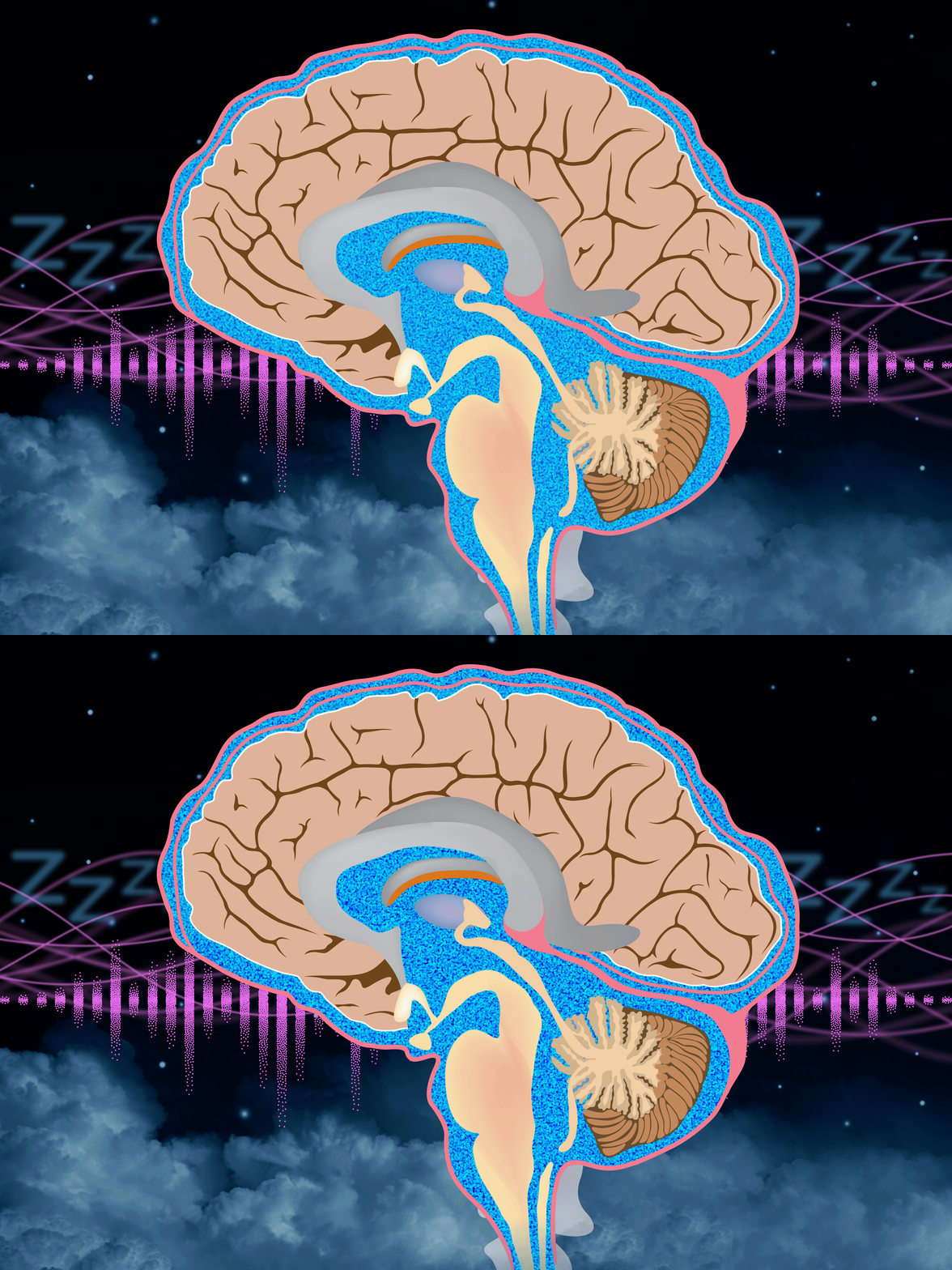
MIT researchers used EEG and functional MRI to time 50-millisecond bursts of pink noise to the peaks of slow brain waves during sleep. In 14 healthy volunteers, the stimulation increased the amplitude of slow electrical activity and cerebrospinal-fluid waves, which are associated with the brain's waste-clearance processes.
This was a small physiological study, not a clinical trial of a sleep product or treatment. The team plans to investigate whether the changes translate into benefits for memory, cognition or conditions linked to neurodegeneration. Until then, stronger measured waves should not be interpreted as proven health improvement.
Go to the source
This is an original summary, not a republication of the full report.
Read the original at MIT News ↗