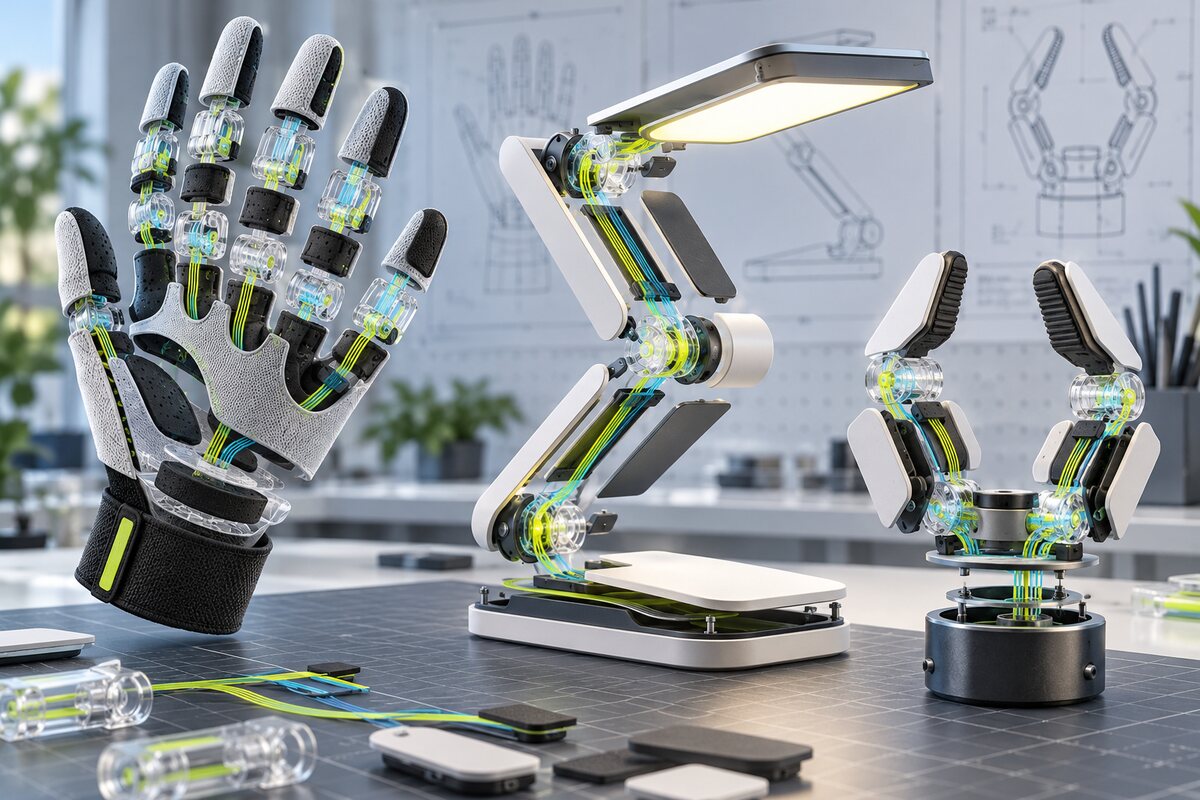
Researchers from MIT CSAIL and Tianjin University developed software that builds sensing into 3D-printed hinges. Different conductive materials are used for the sensing elements and electrical traces, helping reduce interference while tracking as many as three axes of motion.
The team demonstrated objects including a glove that can teach a robot hand, an interactive lamp and a controller. The work is scheduled for presentation at the ACM Symposium on User Interface Software and Technology in early November.
Go to the source
This is an original summary, not a republication of the full report.
Read the original at MIT News ↗